
Last Updated: October 30, 2026
Quick Summary
A recurring drone inspection is a scheduled series of flights over the same site, flown from consistent positions so imagery can be compared visit to visit. Its cost depends on flight frequency, site size and complexity, travel, and reporting depth, so the annual budget should be built from a site-specific quote.
- Flight frequency is the largest single lever on annual cost.
- Ask whether travel, setup, and file processing are billed separately from the hourly or per-visit rate.
- Request the per-visit price at three frequencies to see how much discount is real commitment pricing.
- Raw images are cheapest; processed maps and reports cost more, and faster turnaround adds to the price.
- Model both the outsourced annual cost and the fully loaded in-house cost, including staff time, before deciding.
Table of Contents
- What a Recurring Drone Site Inspection Actually Includes
- Drone Inspection Cost Per Visit: Typical Pricing Structures
- Factors That Change Your Drone Inspection Quote
- How Often Should a Site Be Flown?
- Annual Cost Scenarios and Total Cost of Ownership
- Requesting a Drone Inspection Quote and Reviewing Deliverables
- Frequently Asked Questions
Recurring drone inspections can cut site monitoring costs, but the quote depends on flight frequency, site size, and reporting needs. This guide from West Michigan Aerial Documentation LLC breaks down the cost drivers so you can build a realistic annual budget. Pricing depends on the project; the goal is to help you compare quotes on equal terms.
What a Recurring Drone Site Inspection Actually Includes
A recurring inspection is a scheduled series of flights over the same site, flown from consistent positions so imagery can be compared visit to visit.
A typical package covers flight time, a pilot on site, image or video capture, and a delivered set of files. Some providers add processed maps or reports; others deliver raw images only.
Drone Inspection Cost Per Visit: Typical Pricing Structures
Cost per visit is the number most owners want first, and it is also where quotes are hardest to compare. Providers generally quote in one of two ways, and each one changes how you should read the total.
Hourly rates versus flat per-visit fees
Hourly billing charges for pilot and equipment time, sometimes with a minimum, and suits irregular work. Flat per-visit fees set one price for a defined scope, such as a set number of flights and deliverables, making recurring work easier to budget because each visit's cost is known in advance.
When comparing, ask whether travel, setup time, and file processing are billed separately. A low hourly rate can cost more than a flat fee once those extras are added.
What per-visit pricing typically looks like
Pricing varies widely by scope, and the variables below move a price more than any single rate does. Request a site-specific quote to see current pricing in USD.
How recurring contracts change the per-visit price
Recurring work can be structured in several ways, including per-visit engagements, monthly arrangements, annual agreements, and multi-site agreements. Availability and terms are confirmed in a site-specific quote.
Ask each provider to state three things in writing: the per-visit price at your committed frequency, the minimum visits or contract term required to earn that price, and what happens to the rate if you add sites or increase frequency mid-term. Those answers separate a real recurring program from a one-time quote with a discount stapled on.
Pricing for progress monitoring versus one-time surveys
A one-time survey usually costs less per event but carries no commitment. Progress monitoring costs more to set up because the first visit establishes baseline capture positions, but it spreads that setup across repeated visits and comparable records. Recurring contracts often reduce the per-visit price, though total annual spend grows with frequency. Ask whether the baseline visit is billed at the standard rate or folded into the contract.
Factors That Change Your Drone Inspection Quote
Most quotes differ for reasons that have little to do with the pilot's skill. Understanding these drivers helps you see why two quotes can vary widely.
Site size, complexity and travel
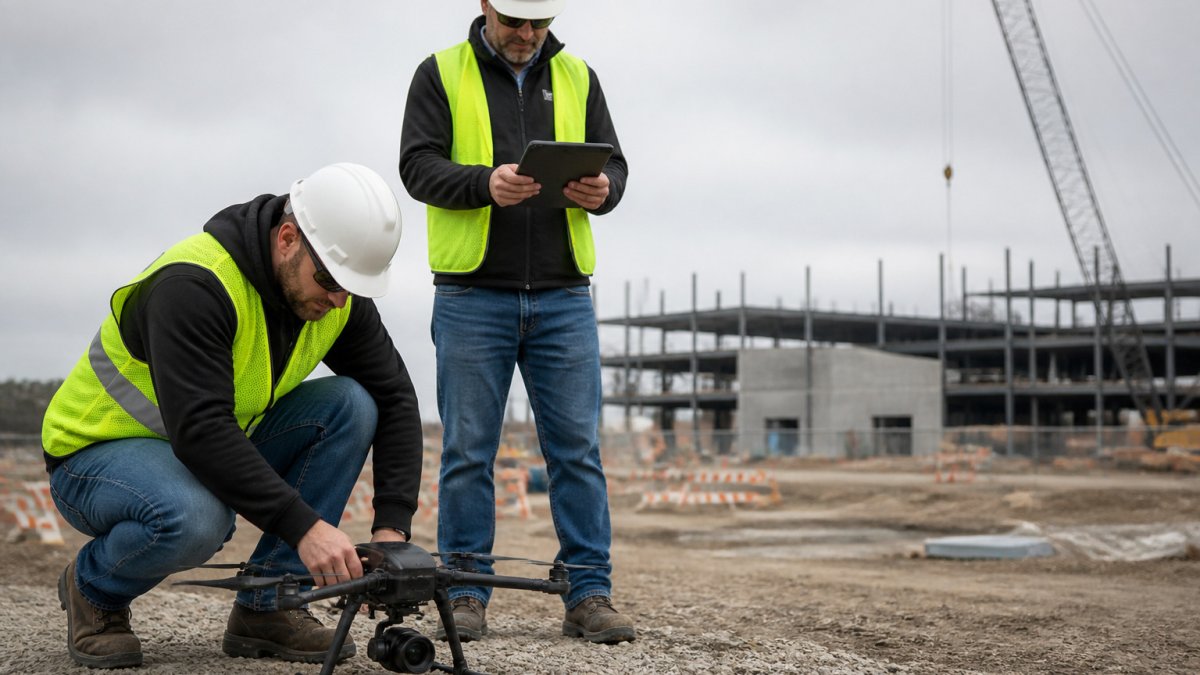
Larger sites take more flight time and often need more battery changes and flight plans. Complex sites with tight airspace, tall structures, or obstacles take longer to fly safely. Travel distance adds drive time and sometimes mileage, which matters more across multiple locations.
Reporting depth, data processing and turnaround
Raw photos are the cheapest output. Orthomosaic maps, measurements, and annotated reports cost more because they require post-flight processing, and faster turnaround generally adds to the price. If stakeholders need files within a day, confirm the quote includes that timing. Data storage and long-term access can also be billed separately, so ask how long files stay available.
How Often Should a Site Be Flown?
Flight frequency is the largest single lever on annual cost. An active build might be flown every two weeks, while a stable property may need only quarterly captures. For key build stages, see how to document construction progress before drywall room by room.
Request a Flight or construction photography inside and out even in the air →
Weather also affects scheduling. Winter projects in Michigan may see gaps when flights are unsafe, so plan a buffer in your schedule and ask how reschedules are handled.
Annual Cost Scenarios and Total Cost of Ownership
The number that actually matters is annual spend, and the honest way to get there is to model both sides: what a recurring service contract costs over a year, and what it would cost to bring the work in-house.
Worked annual scenarios for an outsourced program
The three scenarios below use the same 40-acre commercial site and the same deliverable (processed orthomosaic plus a short condition summary). Only frequency changes. The per-visit figures are planning bands, not quotes.
| Scenario | Visits per year | Per-visit price band | Annual service cost |
|---|---|---|---|
| Quarterly baseline | 4 | $600-$900 | $2,400-$3,600 |
| Monthly monitoring | 12 | $500-$750 | $6,000-$9,000 |
| Biweekly active construction | 26 | $400-$650 | $10,400-$16,900 |
Ask each provider which charges sit outside the per-visit rate, such as travel, data storage, historical access, and rush turnaround, and include them in your annual figure before comparing quotes.
A second example shows how site count changes the math. Ask for the per-site rate at your actual site count rather than multiplying a single-site quote.
Modeling the in-house alternative
Owning the capability is a legitimate option, but the annual cost is easy to underestimate because the visible line items are only part of it. A realistic in-house model typically includes:
- Aircraft and sensors: a commercial-grade airframe plus a payload capable of the imagery you need, replaced or upgraded on a multi-year cycle.
- Remote pilot certification and recurrent training: the FAA Remote Pilot Certificate under Part 107 requires recurrent knowledge testing, and staff time for training and practice flights is a real cost.
- Insurance: hull and liability coverage sized to the site and the client requirements.
- Software: processing, mapping, and storage subscriptions, usually priced per user or per volume of imagery.
- Maintenance and consumables: batteries, propellers, repairs, and firmware upkeep.
- Staff time: flight time, travel, processing, report writing, and data management, the line most often left out of the comparison.
The total-cost comparison, side by side
Build your estimate with these inputs and fill in both columns:
| Input | Outsourced service | In-house program |
|---|---|---|
| Flights per year | Quoted per-visit price × visits | Staff hours × loaded rate |
| Site scope | Included in quote | Flight and processing time per site |
| Deliverables | Processing fee if separate | Software subscription |
| Turnaround | Rush premium if required | Staff availability constraint |
| Travel | Trip charge per visit | Mileage and staff time |
| Fixed costs | None | Aircraft, sensors, insurance, certification, maintenance |
| Data retention | Storage fee if separate | Storage subscription and staff time |
Multiply flights by your quoted per-visit price, then add separate charges for processing, storage, and travel. Compare that annual figure against the fully loaded cost of equipment, licensing, insurance, software, and staff time for an in-house program. In-house work also requires ongoing practice flights and data handling, which many teams underestimate.
Where the annual number is most likely to drift
Three things move an annual estimate after signing: weather cancellations that push visits into a compressed window, scope creep as stakeholders request additional deliverables mid-term, and site changes that alter the flight plan. Ask how reschedules are handled, whether additional deliverables are priced from a published rate card, and how a change in site layout affects the per-visit price.
Requesting a Drone Inspection Quote and Reviewing Deliverables
When you request a quote, give the provider your site details, desired frequency, and the decisions the imagery must support. A precise request produces a comparable quote.
Before you sign, review sample deliverables if available. Confirm that the files are clear enough for your stakeholders and that capture positions will stay consistent across visits.
Frequently Asked Questions
How much does a recurring drone site inspection cost?
Recurring drone site inspection pricing depends on site size, flight frequency, travel distance, and the level of reporting you need. Pricing depends on the scope of work and is confirmed in a site-specific quote. Because West Michigan Aerial Documentation LLC has not published fixed rates in this article, the most accurate figure comes from a site-specific quote. Contact the team with your site address, project timeline, and deliverable requirements to receive current pricing in USD.
Is a recurring drone inspection cheaper than booking one flight at a time?
Repeated flights from consistent camera positions make comparisons between visits more useful. A single flight may be cheaper in the short term if you only need one survey. Compare the total annual spend of a recurring plan against the cost of separate one-time bookings for your expected number of visits.
How often should a construction site be inspected by drone?
Most construction progress monitoring is scheduled every two to four weeks, with more frequent flights during critical phases such as foundation work, framing, and roofing. Frequency should match how fast the site changes and how often stakeholders need updates. Monthly flights are common for smaller projects, while larger or fast-moving builds may justify more frequent capture. Discuss your milestone schedule when requesting a quote so the flight calendar fits your project.
What should I include when requesting a drone inspection quote?
Include the site address and approximate acreage, the number of visits you expect over the project, and the flight altitude or area boundaries if you have them. Specify the deliverables you need, such as high-resolution photos, 4K video, orthomosaic maps, or reports. Note any access restrictions, site safety requirements, and your preferred turnaround time for delivering images. Clear inputs produce more accurate quotes and fewer revisions.
